Grand Mercure Danang - Upscale hotels & resorts
- Linh Ung Pagoda Da Nang: 2026 Guide to the City’s Sacred Spiritual Sites
Grand Mercure Danang
Languages en
en
en
- English
- 简体中文
- 한국어
- Tiếng Việt
- 日本語
- See this hotel on all.accor.com or brand website in other languages :
Linh Ung Pagoda Da Nang: 2026 Guide to the City’s Sacred Spiritual Sites
Linh Ung Pagoda in Da Nang is one of the most visited spiritual destinations for travelers coming to this coastal city in Central Vietnam. Each pagoda is located in a different setting, connected to mountains, the sea, and local Buddhist culture. It is also a suitable choice for those who want to combine relaxation, sightseeing, and a peaceful atmosphere during their Da Nang travel itinerary. The guide below will help you understand each Linh Ung Pagoda, including its location, how to get there, the best time to visit Linh Ung Pagoda, and practical notes for worship and sightseeing.
Tam Linh Ung Tu – Three Pagodas Forming Da Nang’s Spiritual Triangle
When many travelers mention “Linh Ung Pagoda Da Nang,” they usually think first of Linh Ung Son Tra Pagoda at Bai But. However, Da Nang actually has three pagodas sharing the same name, collectively known as “Tam Linh Ung Tu.”
The three pagodas include:
- Linh Ung Son Tra Pagoda at Bai But, Son Tra Peninsula
- Linh Ung Non Nuoc Pagoda at the Marble Mountains
- Linh Ung Ba Na Pagoda on Nui Chua, Ba Na Hills
Together, these three pagodas form a “spiritual triangle” of the city, each offering a different landscape and experience. Son Tra is ideal for visitors who enjoy sea views and the Lady Buddha statue. Non Nuoc carries the atmosphere of an ancient pagoda set among limestone mountains. Meanwhile, Ba Na is suitable for an itinerary that combines spiritual sightseeing with a mountain resort experience.
If you want to combine your visit to Tam Linh Ung Tu with entertainment spots, viewpoints, and dining experiences in the city, you can refer to this list of Da Nang tourist attractions to arrange a more convenient itinerary.
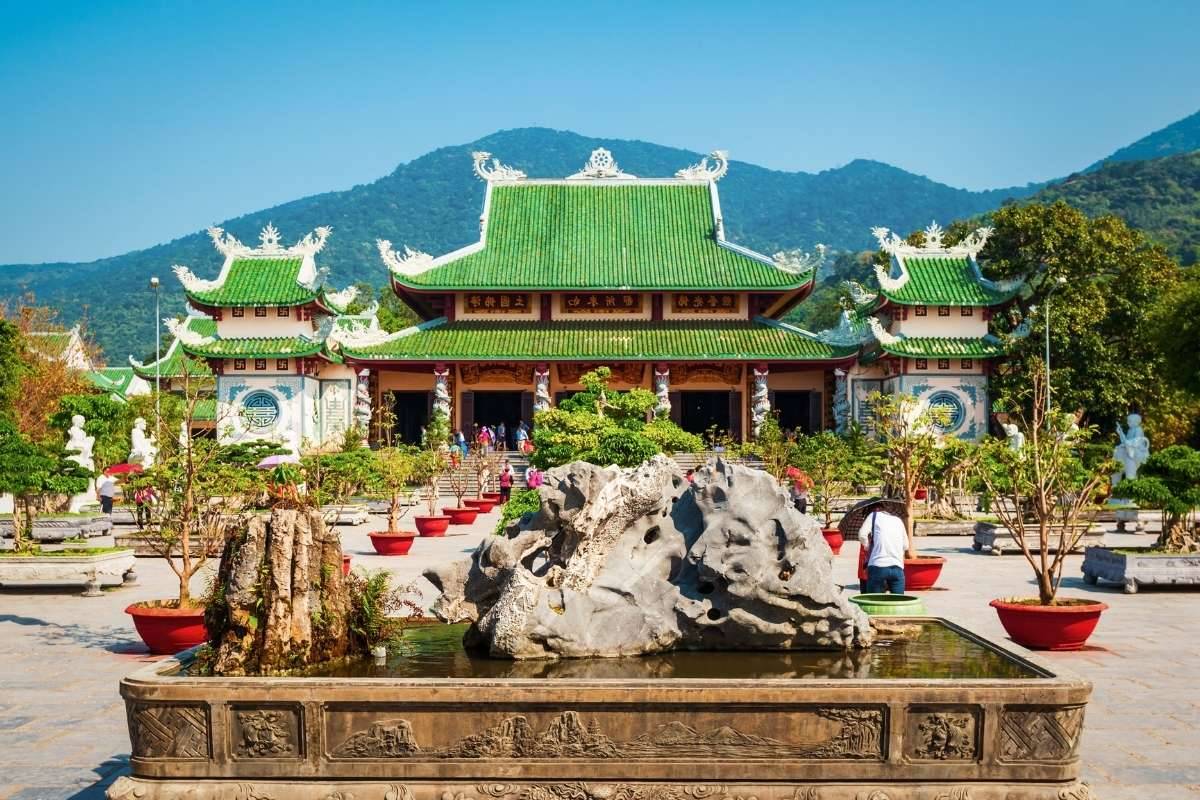
Linh Ung Non Nuoc Pagoda at the Marble Mountains
- Address: 2737+JPW, Hon Thuy Son, Ngu Hanh Son, Da Nang 550000, Vietnam
- Opening Hours: 7:00 AM – 5:30 PM
- Entrance Fee: The pagoda itself is free to enter, but visitors need to buy a Marble Mountains sightseeing ticket: 40,000 VND/adult, 10,000 VND/student, free for children under 6 years old
- Highlights: The oldest pagoda in the Linh Ung spiritual triangle, located on the peak of Thuy Son with a 30-meter-high Xa Loi Tower housing 200 stone statues, Tang Chon Cave, and a majestic limestone mountain landscape surrounded by tranquil greenery.
- Best For: History lovers, ancient architecture enthusiasts, cave explorers, and travelers coming from Da Nang city center or Hoi An.
Linh Ung Non Nuoc Pagoda is the oldest pagoda in Tam Linh Ung Tu. It sits on the peak of Thuy Son, surrounded by limestone mountains, greenery, and many stone stairways leading to natural caves. Since the sightseeing area has many stone steps and natural rock surfaces, you should wear shoes with good grip and avoid visiting during the harsh midday sun.
The History of Linh Ung Non Nuoc Pagoda
According to local materials and common records about the Marble Mountains, Linh Ung Non Nuoc Pagoda was built during the reign of Emperor Minh Mang, a period when Buddhism developed strongly in Central Vietnam. In the past, the pagoda was known as Ung Chon Tu before being renamed Linh Ung as it is today.
The pagoda has been closely connected to the spiritual life of local people in the Marble Mountains area for generations. It serves as a place for Buddhist practice, major religious ceremonies, and pilgrimages for visitors coming to worship while exploring the Non Nuoc scenic site. After several restorations, the pagoda still preserves the atmosphere of an ancient temple set among limestone mountains and the greenery typical of this area.
Ancient Architecture Within the Marble Mountains Scenic Site
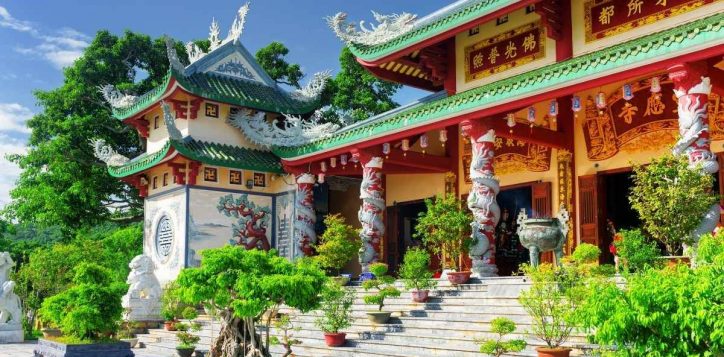
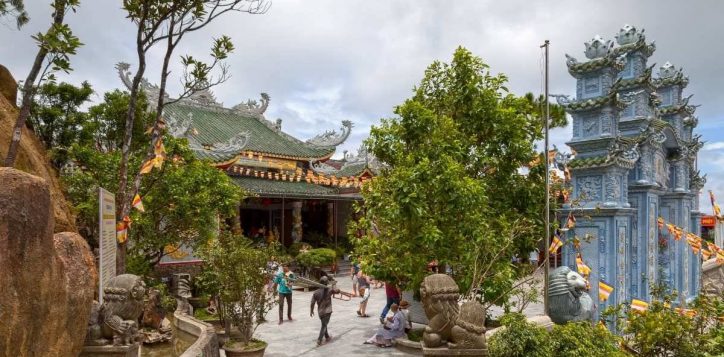
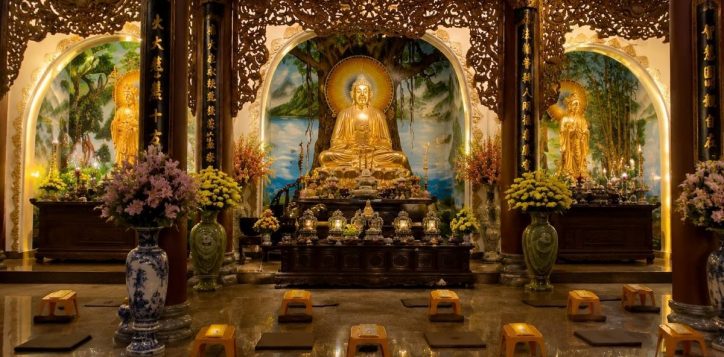
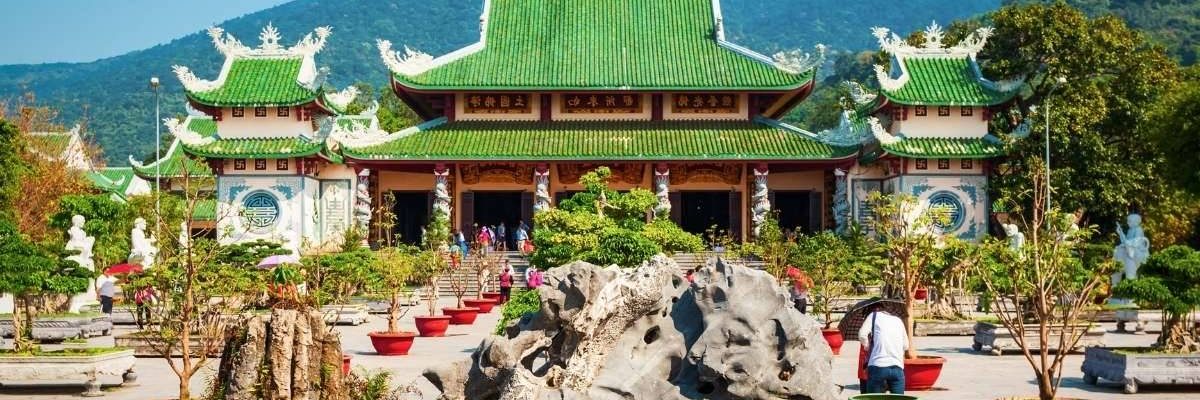
Linh Ung Non Nuoc Pagoda features ancient architectural details such as curved tiled roofs, a solemn main hall, stone courtyards, and Buddha statues placed harmoniously among natural limestone formations. The approximately 30-meter-high Xa Loi Tower is the most prominent structure within the pagoda grounds, adding spiritual depth to the worship space.
Compared with Linh Ung Son Tra Pagoda and Linh Ung Ba Na Pagoda, this site is not defined by grand scale or sweeping views. Its value lies in the feeling of an ancient pagoda, its layers of history, and the quiet atmosphere within the Marble Mountains scenic landscape.
You should take time to observe the paths around the pagoda, the tower area, cave entrances, and the light inside the caves to better appreciate the architectural beauty of this site.
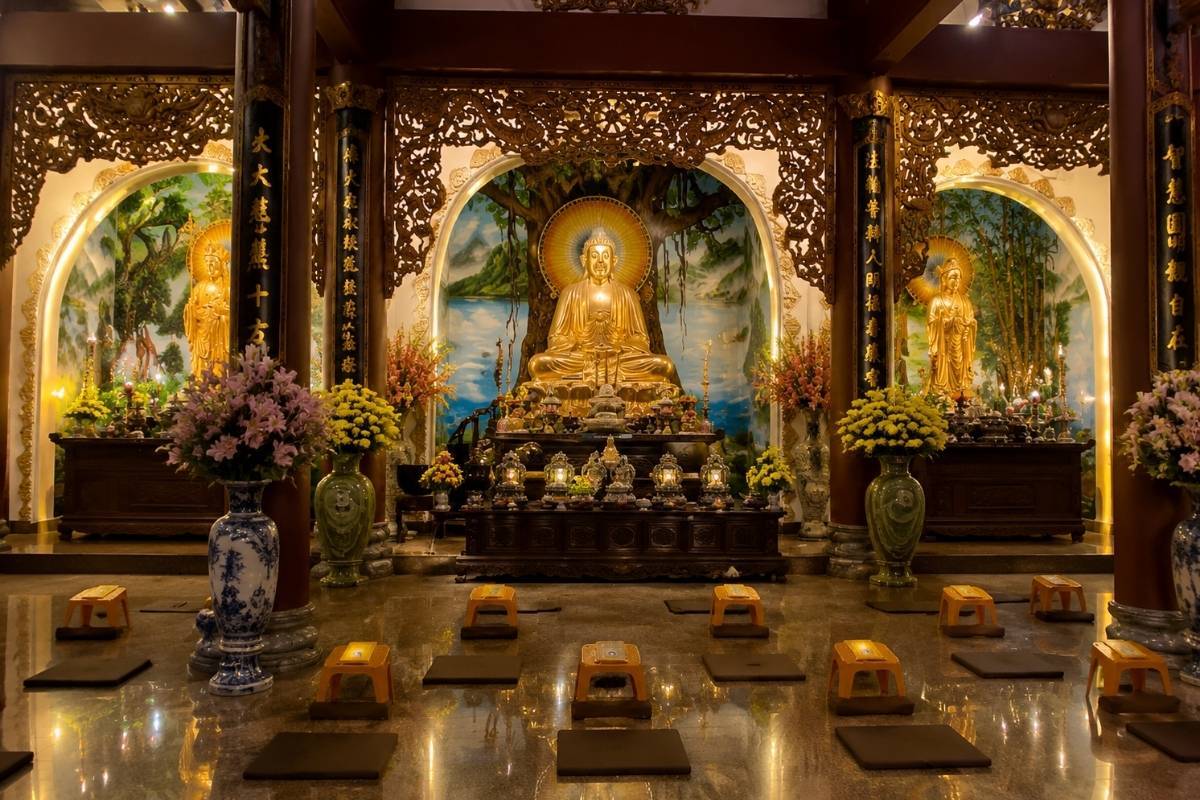
Recommended Experiences at Linh Ung Non Nuoc Pagoda
When visiting Linh Ung Non Nuoc Pagoda, you should take your time and move slowly to fully experience the spiritual atmosphere and the landscape of the Marble Mountains.
- Pay respects at the main hall and keep quiet in ceremonial areas.
- Visit Xa Loi Tower and observe the Buddha statues and stone details inside the tower.
- Explore Tang Chon Cave if your physical condition allows.
- Combine your visit with Tam Thai Pagoda on the same sightseeing route.
- Admire the view from the high points of the Marble Mountains in the early morning or late afternoon.
This area has many stone steps, and some sections are quite steep. Families with young children or elderly travelers should walk slowly, wear shoes with good grip, and allow around 2-3 hours for the full visit.
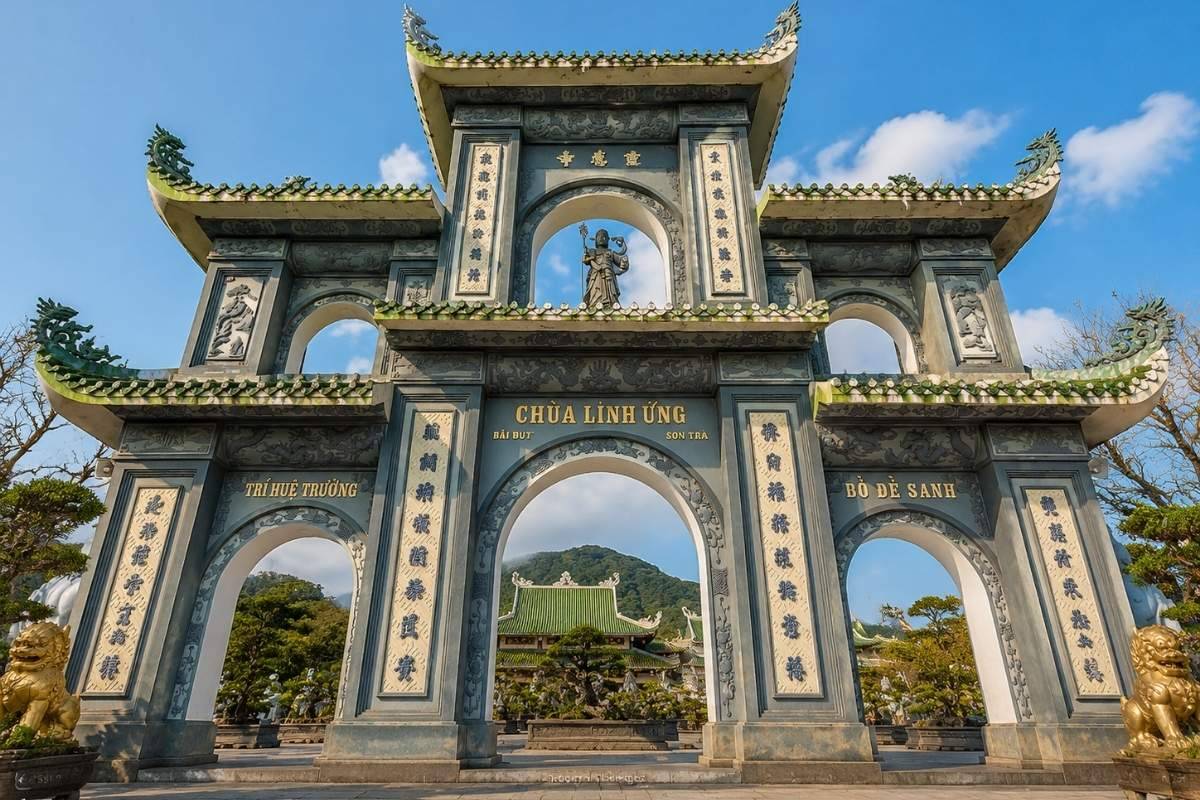
How to Get to Linh Ung Non Nuoc Pagoda
From Da Nang city center, you can follow Le Van Hien Street for about 20-25 minutes to reach the Marble Mountains scenic area. If you are departing from My Khe Beach or Hoi An, the coastal Vo Nguyen Giap route is easy to navigate and convenient for a half-day itinerary.
Visitors can choose a taxi, ride-hailing service, private car, or motorbike. For those unfamiliar with the route or traveling with family, taxis and ride-hailing cars are more comfortable because the area around the Marble Mountains is often crowded on weekends.
After parking at the entrance of the scenic area, you can either take the elevator or walk up to the pagoda area depending on your fitness level and available sightseeing time.
Linh Ung Ba Na Pagoda on Nui Chua
- Address: XXWV+VJ3, Duong Cat Loi, Thon An, Ba Na, Da Nang, Vietnam
- Opening Hours: 8:00 AM – 5:30 PM
- Entrance Fee: The pagoda is located inside Ba Na Hills. Round-trip cable car tickets for non-Da Nang visitors are around 1,000,000 VND/adult and 800,000 VND/child; check sunworld.vn for official 2026 prices
- Highlights: A 27-meter-tall Shakyamuni Buddha statue seated on a lotus pedestal, majestic Northern Buddhist architecture with a three-entrance gate and main hall, and a cool mountain atmosphere surrounded by mist, forests, and greenery at an altitude of 1,400 meters.
- Best For: Travelers who want to combine spiritual sightseeing, entertainment, the Golden Bridge, and a mountain resort experience.
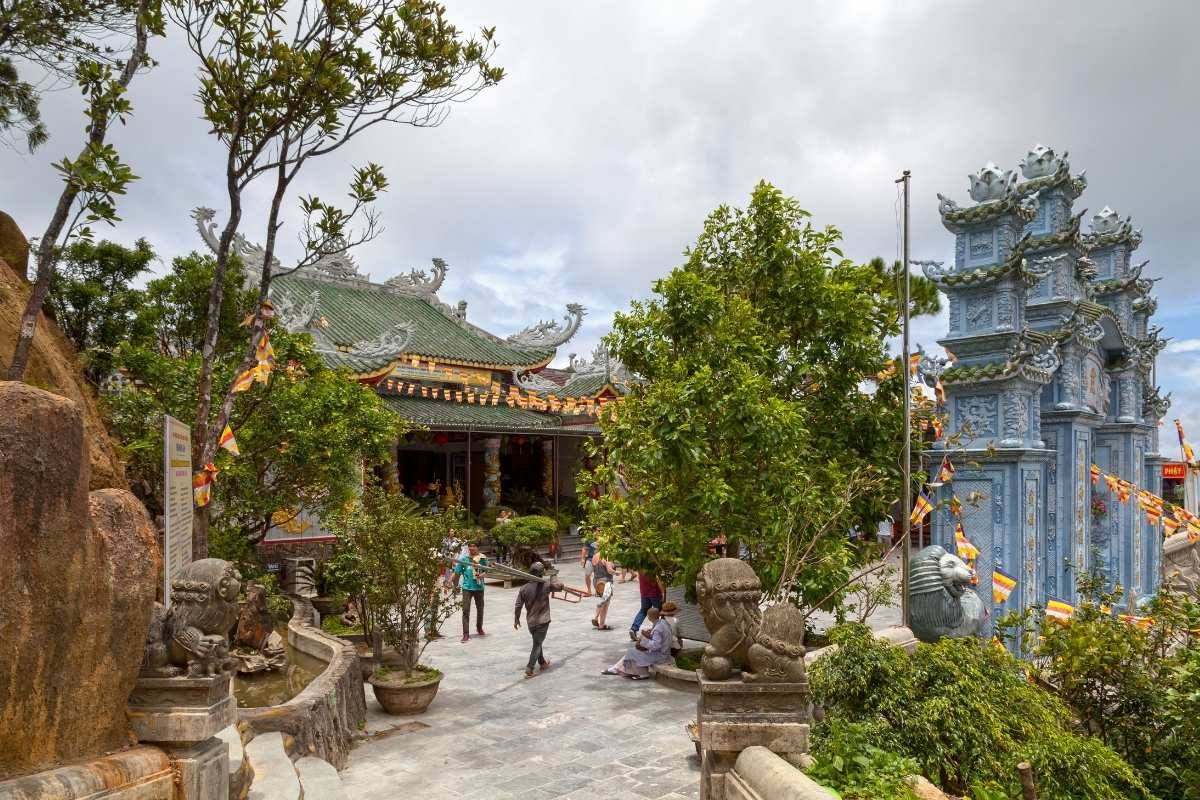
Linh Ung Ba Na Pagoda is located on Nui Chua, about 1,400 meters above sea level. The atmosphere here is cooler than in central Da Nang and often has light mist in the early morning and late afternoon. You should go early, bring a light jacket, and wear comfortable shoes because a Ba Na itinerary usually takes almost a full day.
The Formation of Linh Ung Ba Na Pagoda
Linh Ung Ba Na Pagoda was built during the development of the Ba Na Hills tourist area and was inaugurated in the early 2000s. The pagoda is located on Nui Chua at an altitude of around 1,400 meters, so many visitors include it in their Ba Na sightseeing itinerary.
Unlike the busier entertainment areas below, the pagoda space is quieter and suitable for resting after taking the cable car or visiting the Golden Bridge. For many travelers, this stop helps balance the pace of sightseeing within the mountain resort area.
Northern Buddhist Architecture on the Peak of Nui Chua
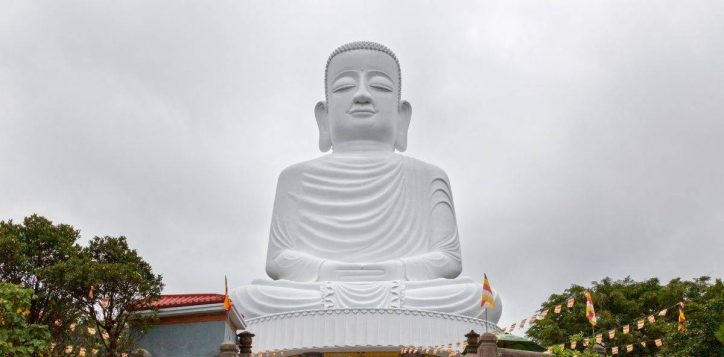
The pagoda follows the Northern Buddhist tradition, with a three-entrance gate, a spacious courtyard, a main hall, and a 27-meter-tall Shakyamuni Buddha statue seated on a white lotus pedestal. Surrounding the grounds are greenery, mountain forests, and thin layers of mist that often appear in the early morning or late afternoon.
The atmosphere here feels very different from central Da Nang because the temperature is cooler and the setting feels separate from the coastal city. On clear days, visitors can see layers of mountain ranges stretching into the distance from the pagoda courtyard.
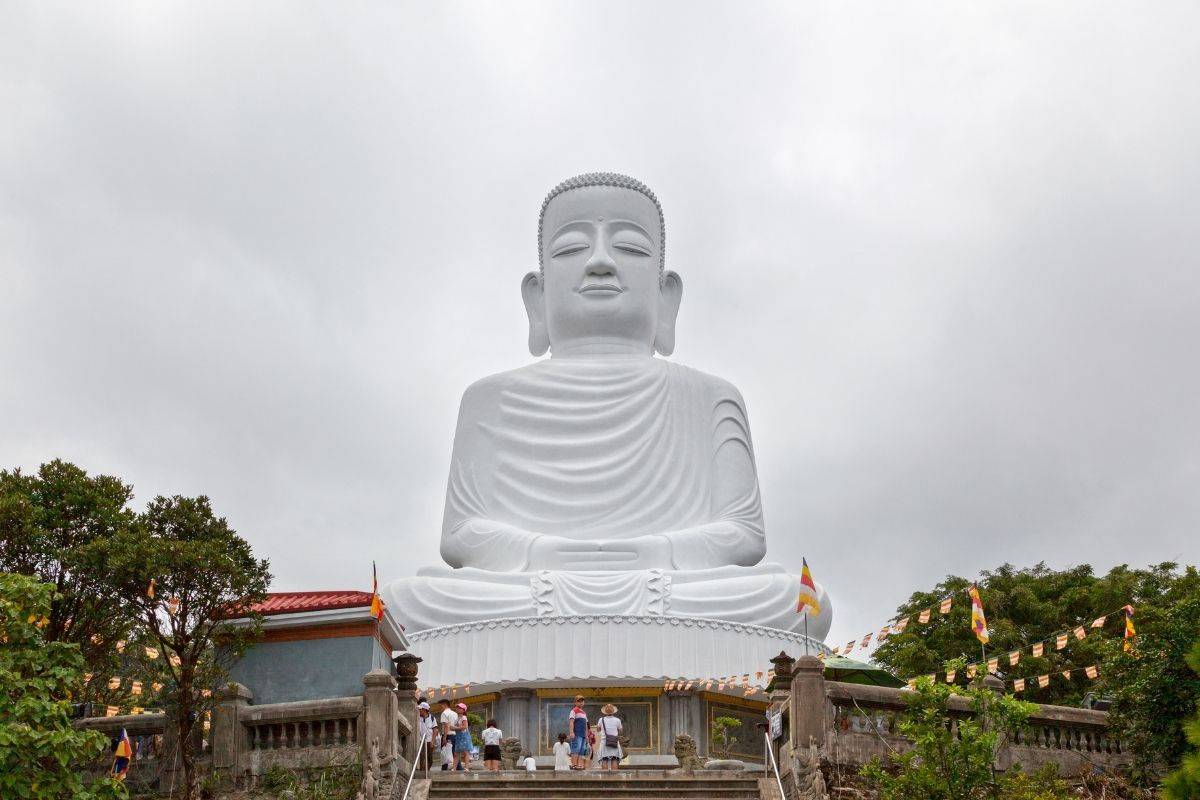
Recommended Experiences at Linh Ung Ba Na Pagoda
The space on Nui Chua is quite expansive, so you should take your time and separate the spiritual experience from the entertainment activities in Ba Na Hills. Morning is usually the most convenient time to visit because the weather is cool and the area is less crowded.
- Pay respects to the Shakyamuni Buddha statue and the main hall
- Walk around the pagoda courtyard, admire the clouds, and enjoy the mountain scenery
- Take photos of the pagoda architecture and surrounding grounds
- Combine your visit with the Golden Bridge and other areas of Ba Na Hills
When entering the pagoda area, visitors should keep quiet because this is a spiritual space. In addition, mountain weather can change quite quickly, so be careful when walking, as stone surfaces may become slippery in mist or light rain.
How to Get to Linh Ung Ba Na Pagoda
From Da Nang city center, you need to travel about 40-50 minutes to Ba Na Hills, then continue by cable car to reach the pagoda area. This is a longer journey, so it is best planned as a full-day trip rather than a quick stop of only a few hours.
Visitors should book tickets in advance, check the cable car operating hours, and prepare a light jacket, drinking water, and comfortable shoes for easier movement around the mountain area.
Linh Ung Son Tra Pagoda at Bai But
- Address: 472H+435 Vuon Lam Ty Ni, Hoang Sa Street, Son Tra, Da Nang, Vietnam
- Opening Hours: 6:00 AM – 9:00 PM
- Entrance Fee: Free
- Highlights: The 67-meter-tall Lady Buddha statue, 18 vividly sculpted Arhat statues, a mountain-backed setting overlooking the sea with panoramic views, and the largest Linh Ung Pagoda complex featuring a blend of traditional and modern Buddhist architecture.
- Best For: First-time visitors to Da Nang, travelers seeking panoramic ocean views, families, and photography enthusiasts.
Linh Ung Son Tra Pagoda is the most well-known pagoda within the Tam Linh Ung Tu spiritual complex, thanks to its location near the city center and its sweeping views of the coastline. The pagoda sits on the Son Tra Peninsula, backed by mountains and facing the East Sea. The road leading up to the pagoda includes several curves and gentle slopes, so it is best to use a vehicle with reliable brakes, maintain a steady speed, and avoid traveling during heavy rain or thick fog.
The Story Behind Linh Ung Son Tra Pagoda
Linh Ung Son Tra Pagoda began construction in 2004 and was officially inaugurated in 2010 on the Son Tra Peninsula. The pagoda is located in the Bai But area, which local stories often associate with fishermen who once discovered a Buddha statue drifting ashore. They later established a place of worship there to pray for peace and safety.
Beyond its spiritual significance, the pagoda has also become a symbolic landmark facing the sea in Da Nang. Many local residents and fishermen come here to pray for calm weather, safe journeys, and peaceful lives.
Architecture and the Lady Buddha Statue at Linh Ung Son Tra Pagoda
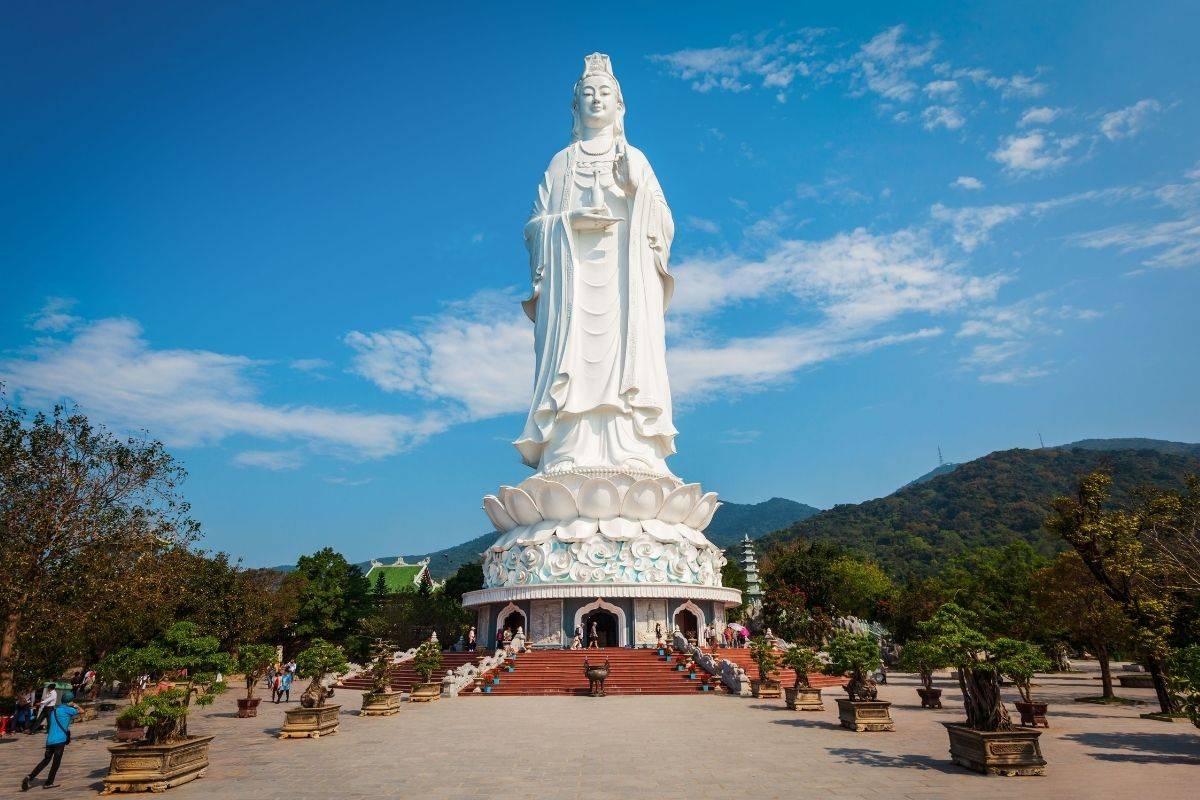
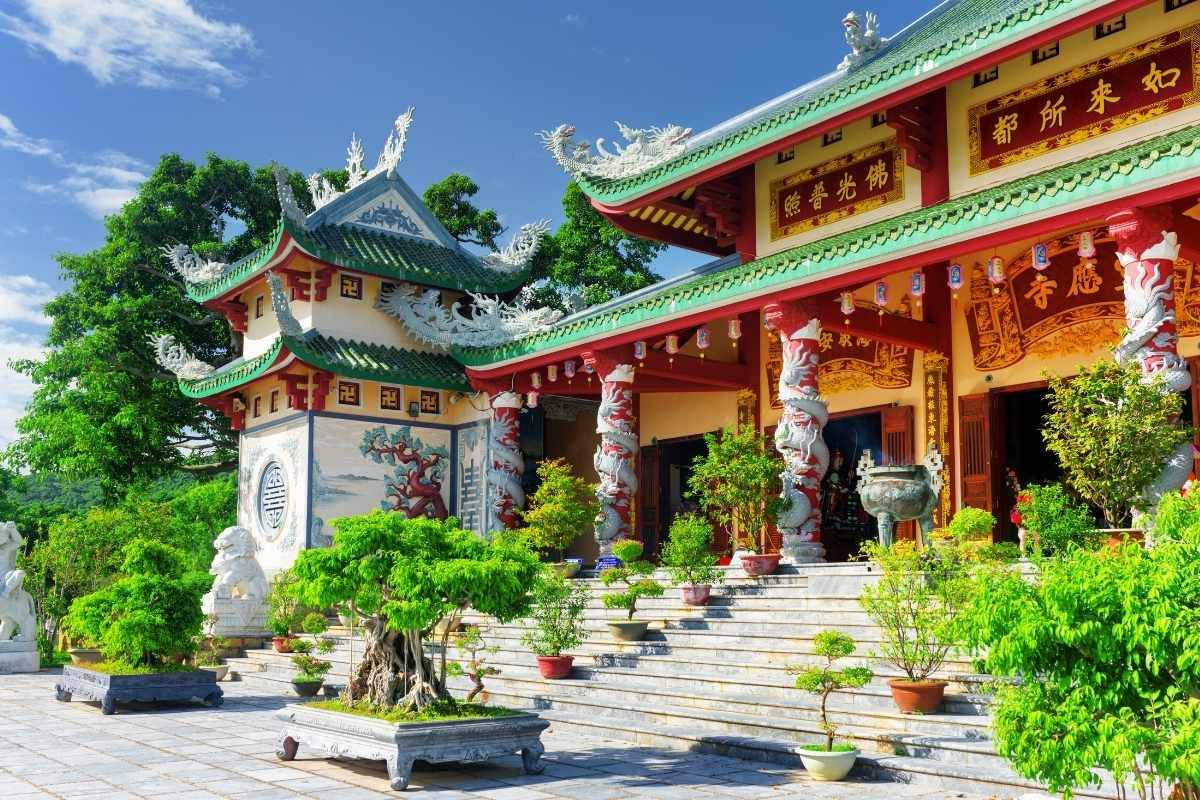
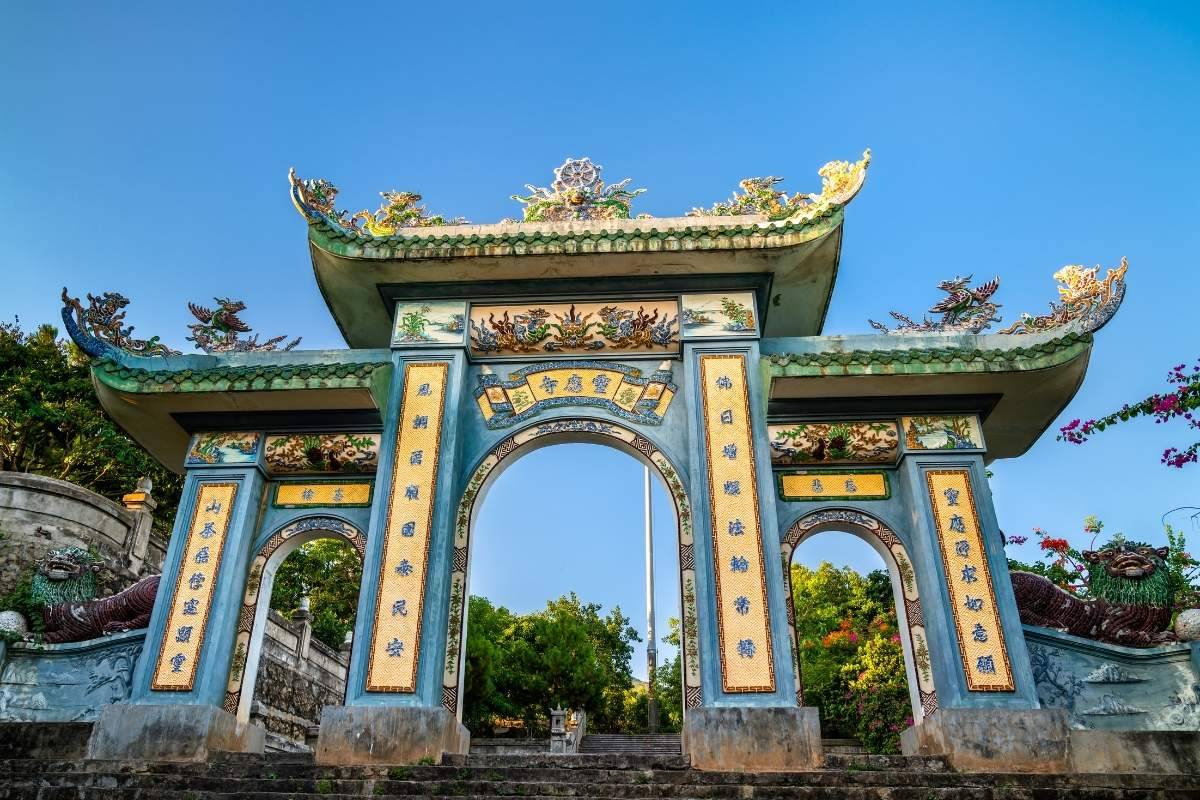
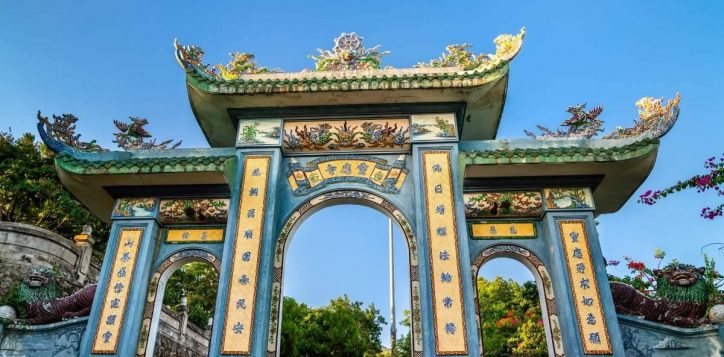
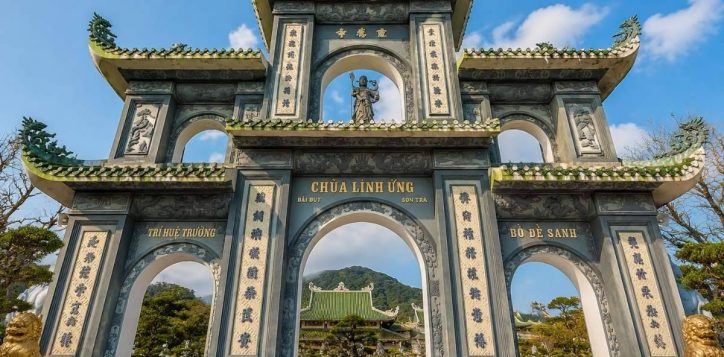
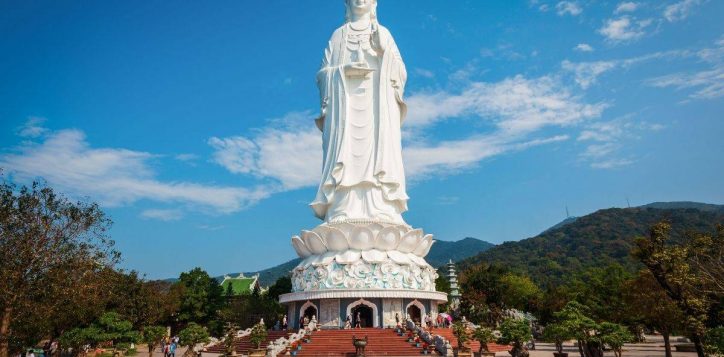
The pagoda combines traditional Buddhist architecture with a spacious seaside setting. Its most iconic feature is the 67-meter-tall Avalokitesvara Bodhisattva statue, standing on a lotus pedestal and facing the East Sea. Inside the grounds, visitors will also find a grand main hall, a Three-Entrance Gate, a row of Arhat statues, and wide courtyards overlooking the city below.
The Lady Buddha statue can be admired from several different viewpoints. Looking up from the base of the statue allows visitors to fully appreciate the scale of the structure, while the pagoda courtyard offers one of the best panoramic views of Da Nang and the coastline from above.
Recommended Experiences at Linh Ung Son Tra Pagoda
The pagoda grounds are quite spacious, making it easy to combine spiritual sightseeing with exploring the natural scenery of the Son Tra Peninsula in a single trip.
- Pay respects at the Lady Buddha statue and the main hall
- Walk around the pagoda courtyard while enjoying views of the sea and the city
- Take photos at the Three-Entrance Gate and the Arhat statue area
- Combine your visit with attractions on the Son Tra Peninsula, Ban Co Peak, or My Khe Beach
When taking photos inside the pagoda grounds, visitors should remain respectful and avoid inappropriate poses or behavior that may disturb those who are worshipping.
How to Get to Linh Ung Son Tra Pagoda
From central Da Nang, follow the route toward My Khe Beach via Vo Nguyen Giap Street, then continue along Hoang Sa Street to reach the Son Tra Peninsula. Travel time is usually around 20-30 minutes, depending on your starting location.
Taxis, ride-hailing services, private cars, and motorbikes are all suitable for this route. For travelers who are less experienced driving on sloped roads or those traveling with family, taxis and cars are generally the more comfortable option. Before heading up Son Tra, you should check your brakes, fill up your fuel tank, and avoid traveling during heavy rain or dense fog.
Best Time to Visit Linh Ung Pagoda
The ideal time to visit Linh Ung Pagoda is usually between February and August. During this period, Da Nang’s weather is generally drier, making it easier to travel to Son Tra Peninsula, walk around the Marble Mountains, or explore Ba Na Hills.
Early morning and late afternoon are the most comfortable times for worship, sightseeing, and photography. At Linh Ung Son Tra Pagoda, mornings often bring cooler air and clearer ocean views. Meanwhile, Ba Na Hills may become foggy in the late afternoon, so visitors should check the weather forecast before traveling.
If you plan to combine multiple attractions during your Da Nang trip, you can also read more travel tips about the best time to visit Da Nang to organize a more convenient itinerary.
Suggested Itineraries for Each Linh Ung Pagoda
You do not necessarily need to visit all three Linh Ung Pagodas in a single day. A more comfortable itinerary should depend on your length of stay, physical condition, transportation, and hotel location to avoid spending too much time traveling.
- Morning trip to Son Tra: Start from the city center or My Khe Beach area, visit Linh Ung Son Tra Pagoda to admire the Lady Buddha statue, walk around the pagoda grounds, and enjoy the ocean view. Afterward, you can continue exploring the Son Tra Peninsula or return to the beach area to relax.
- Half-day exploration of Non Nuoc: Visit Linh Ung Non Nuoc Pagoda together with the Marble Mountains, Tang Chon Cave, and the stone carving village. If you still have time, you can continue on to Hoi An Ancient Town.
- Spend a full day at Ba Na: For Linh Ung Ba Na Pagoda, it is best to depart early because the cable car ride and sightseeing activities take quite a long time. After visiting the Shakyamuni Buddha statue, you can continue exploring the Golden Bridge and other attractions within Ba Na Hills.
- Combine two pagodas near the city center: If you prefer a lighter schedule, you can visit Son Tra in the morning and Non Nuoc in the afternoon. It is not recommended to add Ba Na on the same day, as the travel time and cable car waiting time can become exhausting.
Important Notes for Visitors
Linh Ung Pagodas are sacred spiritual sites, so the experience becomes more meaningful when visitors remain respectful in both behavior and appearance. Beyond sightseeing and photography, these pagodas are also places where many people come daily to worship and pray.
- Wear modest and respectful clothing, avoiding outfits that are too short or revealing.
- Keep quiet inside the pagoda grounds and avoid loud music or running around.
- Take photos respectfully, avoid inappropriate poses, and refrain from photographing worshippers up close without permission.
- Wear sneakers or flat shoes because many areas include stone stairways and uneven surfaces.
- Bring drinking water, a hat, sunscreen, or a light jacket if visiting Ba Na Hills.
- Check official sources in advance for ticket prices, cable car fees, parking fees, or elevator charges.
- Help keep the area clean and avoid touching sacred statues or offerings without permission.
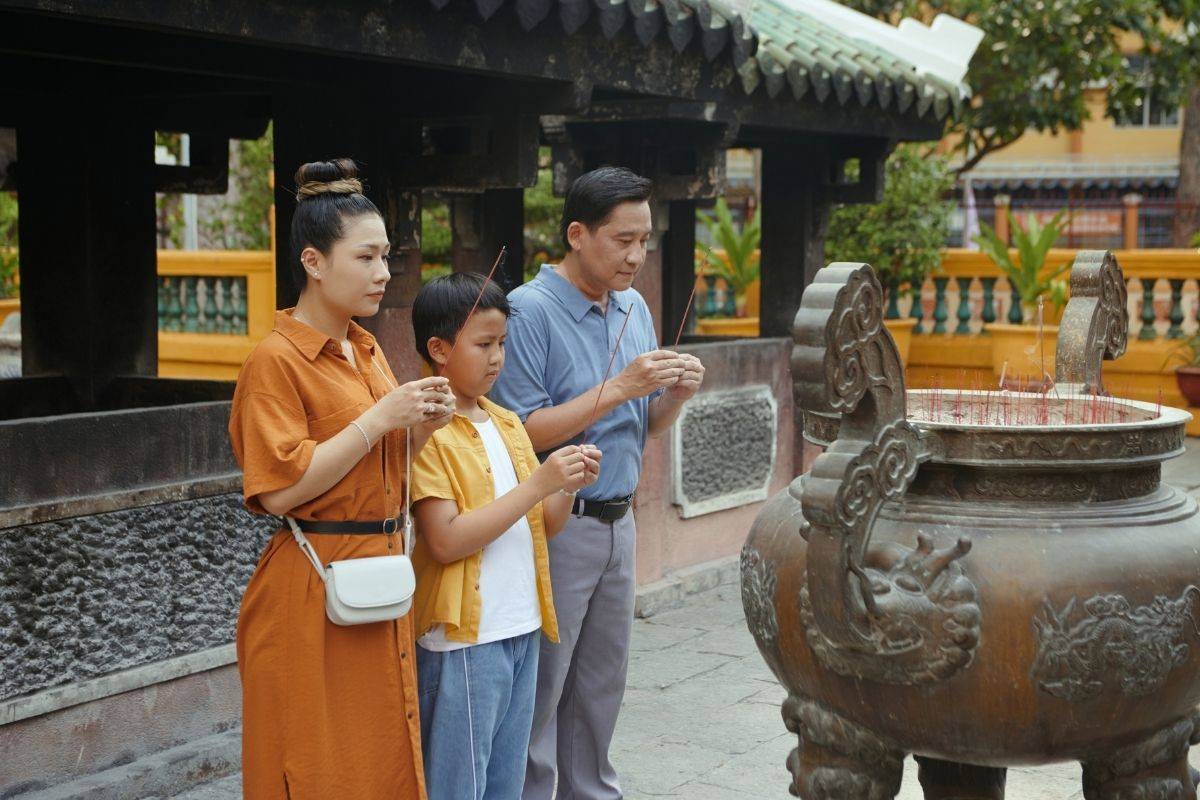
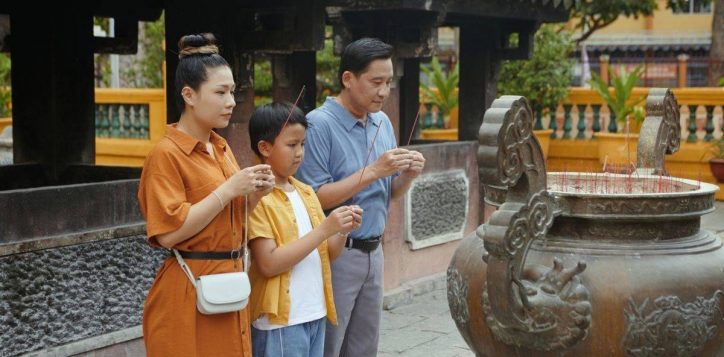
- If offering incense or making donations, do so respectfully and follow the pagoda’s guidance.
Convenient Stays at Grand Mercure Danang After Your Spiritual Journey
After visiting the Linh Ung Pagodas, many travelers prefer staying somewhere convenient for resting, dining, and continuing to explore the city without spending too much time commuting. Located on Green Island, Grand Mercure Danang offers easy access to Da Nang city center, My Khe Beach, Son Tra Peninsula, and the Marble Mountains area.
For families or groups planning a longer getaway, you can explore the FAMILY FUN OFFER, designed for a 3-day, 2-night stay with a range of family-friendly amenities for guests traveling with children.
In addition, Grand Mercure Danang currently provides a transportation service for visiting Linh Ung Pagodas, making it easier for travelers to move between Da Nang’s spiritual tourism destinations without having to drive on mountain and coastal roads themselves.
You can find more accommodation details and the latest offers directly on the official Grand Mercure Danang website.
Grand Mercure Danang ☆☆☆☆☆
Lot A1, Green Island, Hoa Cuong Ward, Danang
Vietnam
Tel: (+84) 2363797777
Fax:(+84) 2363797797
Email:
h7821@accor.com

Follow us
Stay in touch and connected to all the news and happenings.